MirrorBrain was an LLM-augmented, Zettelkasten-style note-taking app: an Obsidian-like graph of atomic notes where the model auto-generates the connections, context, and metadata between ideas. It was the flagship product of KaleidoAI, my startup attempt through the Ethos Fund New Venture Challenge. I led a team of 5, building on Next.js/TypeScript, FastAPI, Convex, and Qdrant.
It did not succeed, and the reason was execution, not idea. I’m keeping it here precisely because the post-mortem taught me more than a polished win would have.
The concept
The product centered on a few interlocking ideas:
- Notes with an Obsidian-style structure, editable like Notion, linkable to knowledge sources, and quick to scaffold from a short description.
- Knowledge sources ingested from PDFs, docs, slides, websites, YouTube, and podcasts, then auto-summarized into chapter summaries, Q&A, related works, and tags.
- A glossary that auto-builds definitions and related concepts from terms extracted out of your notes.
- A chat interface that retrieves across your notes and their attached sources, behind a fast, Notion-like command bar.
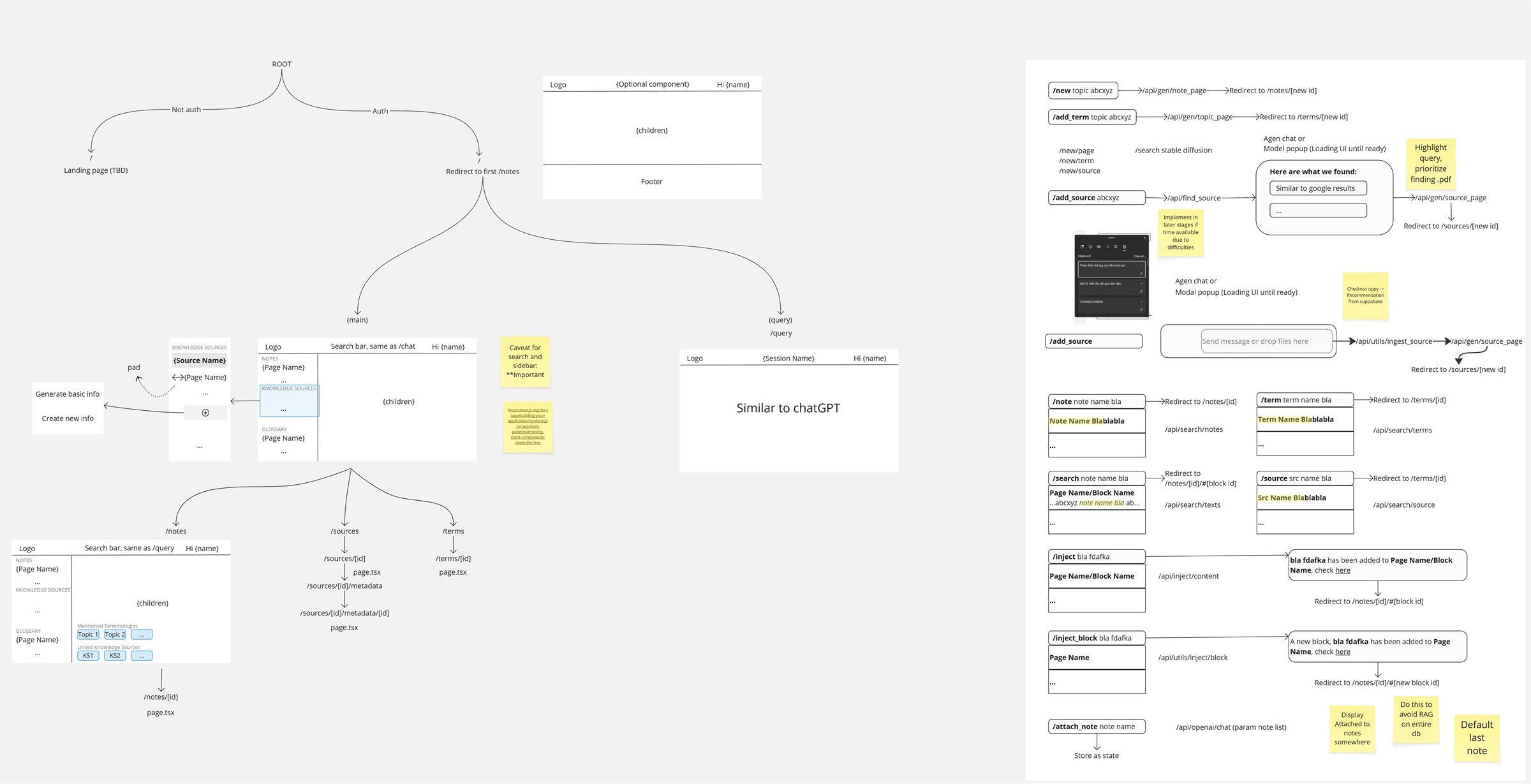
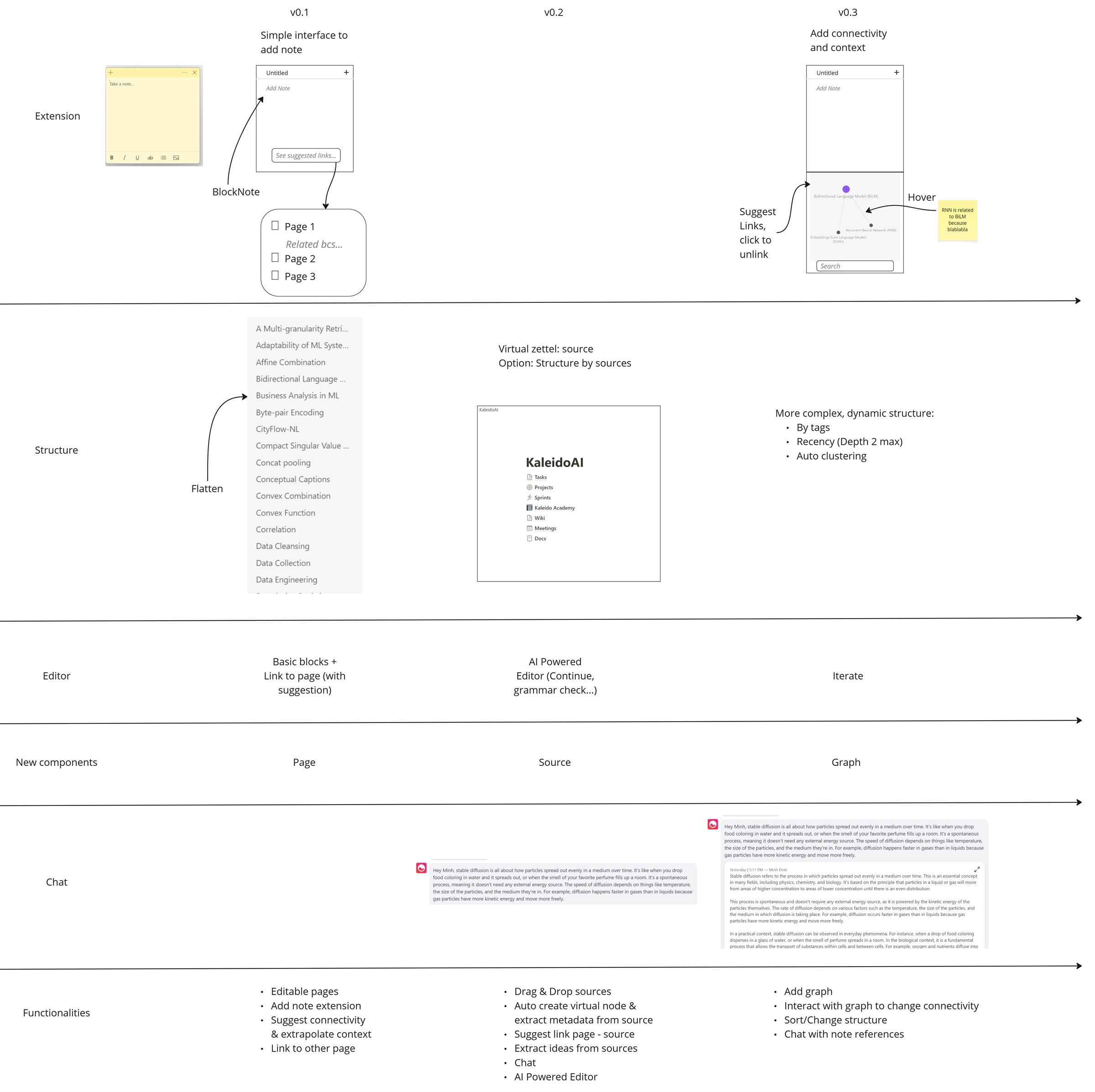
It began life as a browser extension for capturing notes on the fly, then grew into a full workspace: editable block-based pages, a knowledge graph that suggests links and extrapolates context, and an AI-powered editor with continue and grammar assists. The buttons above open full-resolution versions of each design.
What I built and led
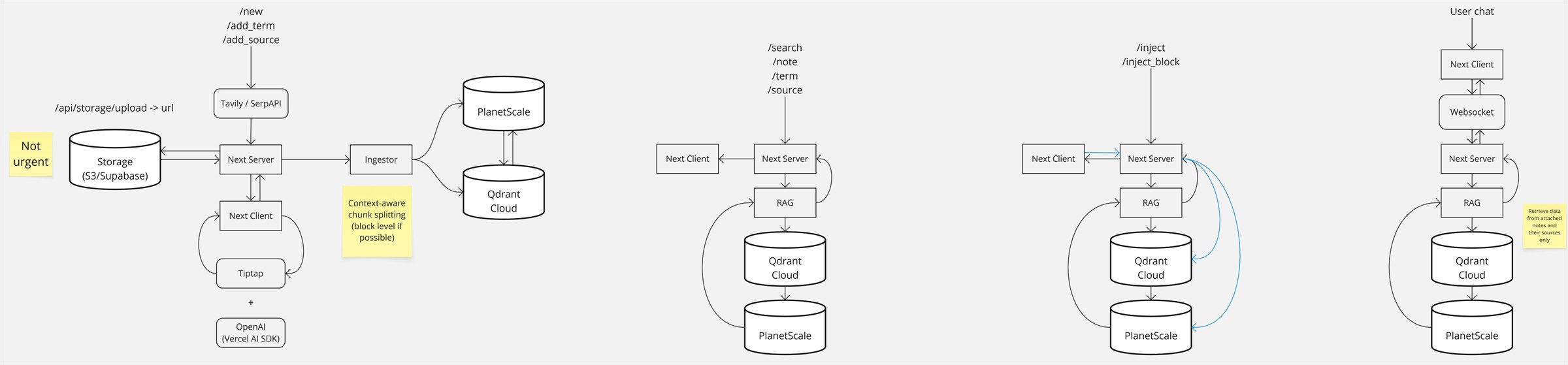
The stack was Next.js + TypeScript + Tailwind with BlockNote as the editor, a FastAPI backend, Convex for real-time data, and Qdrant for vector search. The system fanned out into four paths: ingestion (Tavily/SerpAPI lookups plus context-aware, block-level chunk splitting), search and RAG, block-level injection back into pages, and a websocket chat scoped to a note’s attached sources.
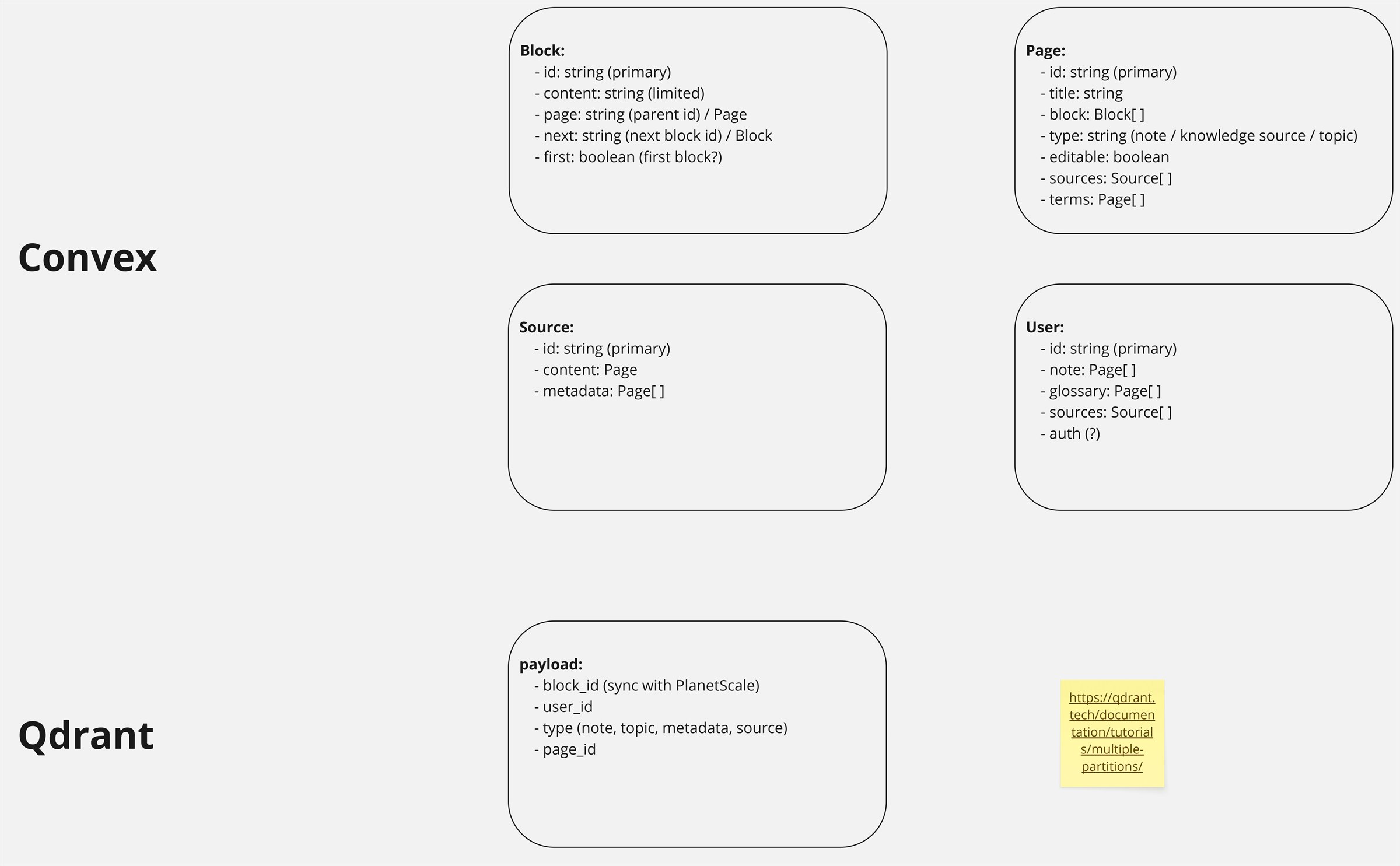
The data model stayed deliberately small: pages typed as note, source, or topic, assembled from a linked list of blocks, with each block mirrored into Qdrant by id.
Two engineering details I’m still fond of:
- Reverse-engineering BlockNote’s side-menu UI to bend the editor into the linked-note interactions the product needed.
- Replacing Qdrant vector search with Okapi BM25 for the text-retrieval path: for our note-sized corpus, lexical BM25 was faster and good enough, and it removed an entire moving part from the hot path.
Post-mortem
- The idea wasn’t the problem; execution was. We over-invested in product surface and architecture before pressure-testing demand and shipping cadence: the classic founder trap.
- Sometimes the boring choice wins. Swapping a vector DB for BM25 was a small reminder that the simplest tool that clears the bar beats the impressive one that doesn’t.
- Leading five people taught me delivery discipline (Kanban, scoping, and saying no) more than any single technical task did.
Code for the v0 build lives in the KaleidoAI repo.